
Three of the ten costliest U.S. hailstorms hit Denver
Concrete Contractors in Denver, CO
Flatwork, steps and slab repair for a mile-high city of more than 715,000 people.
- Free site visit and an itemized written quote
- Base depth, slab thickness and joint layout spelled out up front
- Air-entrained concrete and a proper cure for Front Range winters
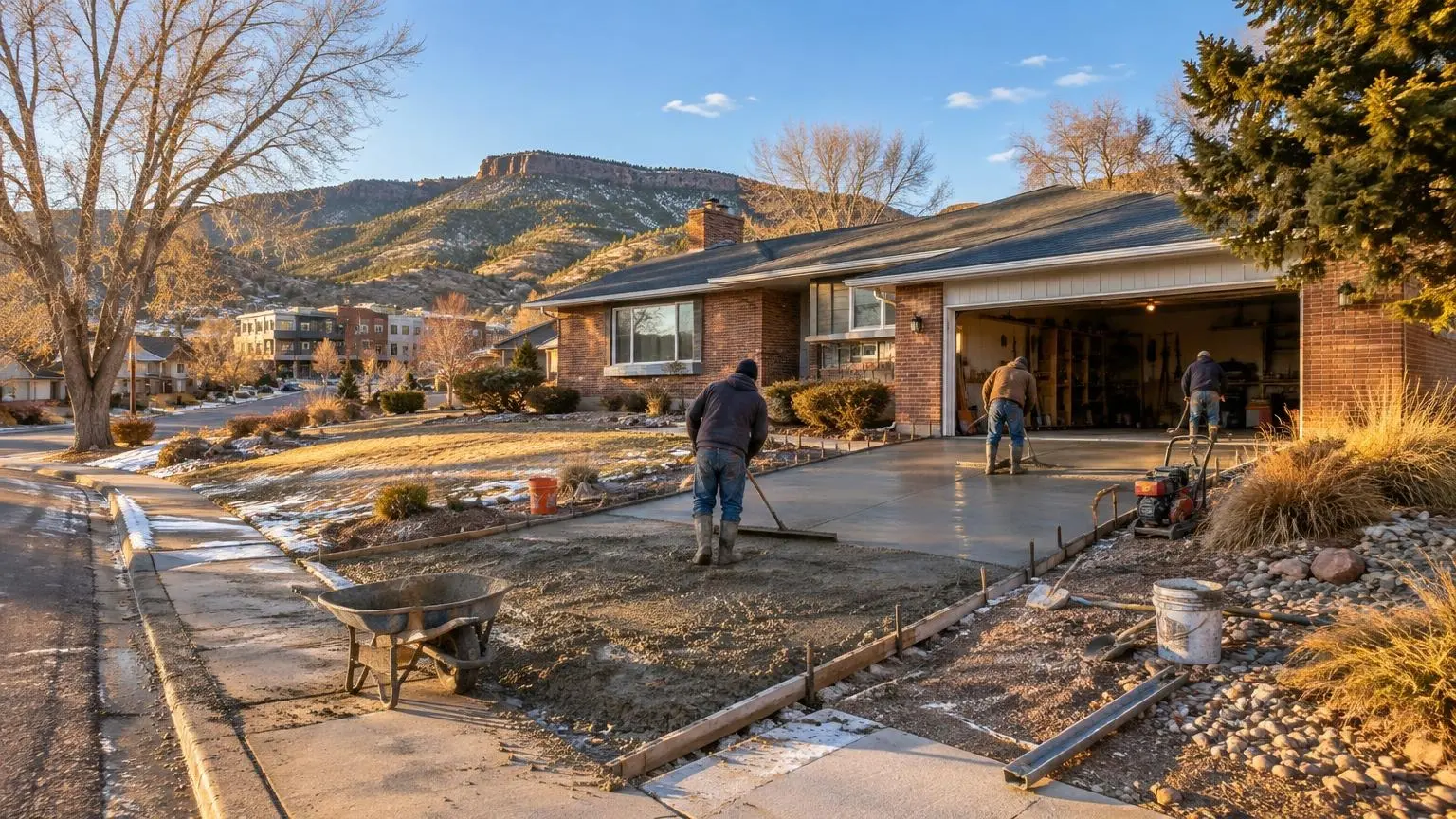
Pouring Concrete in the Mile High City
Denver is the next city east of us, and our concrete contractors work across it from the west-side neighborhoods to the blocks around City Park. The 2020 census counted 715,522 residents, and the city now uses 78 official neighborhoods for planning. Each one has its own mix of house ages, lot sizes and alley setups, so a driveway job in one part of Denver can look very different from the same job a few miles away.
Weather that hits from above
Most people think about Denver winters, but hail matters too. Denver ranks 10th among larger continental U.S. cities most prone to hail, and it has taken three of the ten costliest hailstorms in the country: July 11, 1990, July 20, 2009, and May 8, 2017. Cured concrete shrugs off most hail. Fresh concrete does not. A storm that rolls through a few hours after a pour can pit the surface and leave a finish that looks like it was hit with gravel.
That is why we watch the forecast closely from late spring through summer. If storms are likely, we move the pour or have plastic and blankets on site to cover the slab once it can take them. It is one of the small habits that makes a real difference here.
Winter swings, not just cold
Denver's climate record describes winters that trade snow and very low temperatures for mild spells, with large daily temperature swings and chinook winds that warm things up fast. The 1991 to 2020 airport normals list about 49 inches of snow a year. For concrete, those swings mean melting and refreezing, sometimes in a single day. We use air-entrained mixes for every outdoor slab, place control joints so cracks land where we want them, and cure the surface properly.
Old blocks, new blocks
Denver became a consolidated city and county on December 1, 1902, and some neighborhoods carry more than a century of patch work in their sidewalks and drives. In older areas we often find:
- Driveway strips or narrow single-car drives that owners want widened
- Front steps settled away from the porch, leaving a gap that catches water
- Public walks lifted by tree roots, with a trip edge at the joints
- Detached garages on thin or cracked floors that need a new slab
Newer infill and rebuilt lots bring a different list: a patio sized to a small backyard, a pad for a trash enclosure, or a stamped walk that ties a new house to an old alley.
Sidewalks and the right-of-way
Work on a public sidewalk, curb cut or apron in Denver involves the city, not just the homeowner. We check what the city requires for your block before we quote the job as final, and we build the time for any approval into the schedule. Private work behind the property line, like a patio or a garage floor, is usually simpler, but we still confirm it.
Services across Denver
Concrete driveways and new aprons. Concrete patios for small and mid-size yards. Stamped concrete for walks and patios where you want pattern and color. Sidewalks and steps, including stoops and front walks. Garage and shed slabs for detached garages and backyard sheds. Concrete repair and replacement when a section has heaved, sunk or flaked.
What the official elevation means for you
Denver's official elevation of 5,280 feet is set by a benchmark on the steps of the State Capitol. Thin, dry air and strong sun dry a slab's surface faster than many crews expect. We plan finishing around that, keep the surface damp or sealed with a curing compound, and avoid pouring flatwork in the hottest part of a windy afternoon.
Denver Details That Affect Concrete
- Hail record. Denver ranks 10th among larger continental U.S. cities most prone to hail, with major storms in 1990, 2009 and 2017.
- Neighborhoods. The city uses 78 official neighborhoods, a system that began with 73 statistical neighborhoods in 1970.
- Mile high. The official elevation is 5,280 feet, set by a benchmark on the State Capitol steps.
- Snowfall. The 1991 to 2020 airport normals list about 49 inches of snow per year.
Denver Questions
Can hail damage a new concrete patio in Denver?
Cured concrete handles hail well, but a slab poured that day can be pitted by a storm. We watch the forecast during hail season and keep covers on site, or move the pour if storms are likely.
Who handles the public sidewalk in front of my Denver home?
Sidewalk and curb work in the public right-of-way involves the city. We check the current rules for your block before we finalize a quote and include any approval time in the schedule.
My detached garage floor is cracked. Do I need a whole new slab?
Not always. If the cracks are narrow and the slab is level, sealing and patching may be enough. If sections have sunk or the base has washed out, we recommend removal and a new slab on a compacted base.
Free Estimates in Denver, CO
Send us a few details about your Denver project and we will set up a visit.
Concrete Contractors Near Denver
- Concrete Contractors in Lakewood, CO
- Concrete Contractors in Golden, CO
- Concrete Contractors in Wheat Ridge, CO
- Concrete Contractors in Arvada, CO
- Concrete Contractors in Edgewater, CO
- Concrete Contractors in Applewood, CO
- Concrete Contractors in Littleton, CO
- Concrete Contractors in Englewood, CO
- Concrete Contractors in Sheridan, CO
- Concrete Contractors in Morrison, CO
- Concrete Contractors in Ken Caryl, CO
- Concrete Contractors in Columbine, CO
- Concrete Contractors in Dakota Ridge, CO
- Concrete Contractors in Westminster, CO
- Concrete Contractors in Evergreen, CO
- Concrete Contractors in Centennial, CO
- Concrete Contractors in Highlands Ranch, CO
- Concrete Contractors in Broomfield, CO
- Concrete Contractors in Fairmount, CO
- Concrete Contractors in Genesee, CO